In most cases, the answer is yes. Almost every U.S. state requires drivers to carry some form of auto insurance before they get behind the wheel. This rule exists to protect everyone on the road, not just you.
If you cause an accident, insurance covers the cost of injuries and property damage. Without it, you could pay these costs out of your own pocket. That’s why lawmakers treat auto insurance as a legal requirement, not a suggestion.
A few states take a different approach. They allow drivers to prove financial responsibility another way. We’ll explain those exceptions below, along with what “mandatory” really means in practice.
Which States Require Auto Insurance
Most states legally require drivers to carry liability insurance at a minimum. Liability coverage pays for injuries or damage you cause to someone else. It does not cover your own vehicle or injuries.
Each state sets its own minimum coverage limits. These limits usually include:
- Bodily injury liability per person
- Bodily injury liability per accident
- Property damage liability
The exact dollar amounts vary widely. A driver in one state might need $25,000 in bodily injury coverage. A driver in another state might need $50,000 or more. Always check your specific state’s Department of Motor Vehicles (DMV) website for current minimums, since these numbers do change over time.
States With Alternative Requirements
A small number of states don’t strictly mandate insurance. Instead, they let drivers choose a different path to prove financial responsibility.
New Hampshire is the most well-known example. Drivers there aren’t required to buy insurance. However, they must prove they can cover damages if they cause an accident. This usually means posting a bond or a cash deposit with the state.
Virginia also offers an alternative. Drivers can pay an uninsured motorist fee instead of buying a policy. This fee doesn’t provide any actual coverage. It simply allows the driver to legally operate a vehicle without insurance, though they remain financially responsible for any accident they cause.
These exceptions are rare. For the vast majority of drivers, buying an insurance policy is the only practical option.
What Type of Coverage Is Legally Required
State law typically requires liability coverage, not full coverage. This distinction matters a lot, and many new drivers misunderstand it.
Liability coverage protects other people. It pays for their medical bills or vehicle repairs if you’re at fault. It does not pay to fix your own car or treat your own injuries.
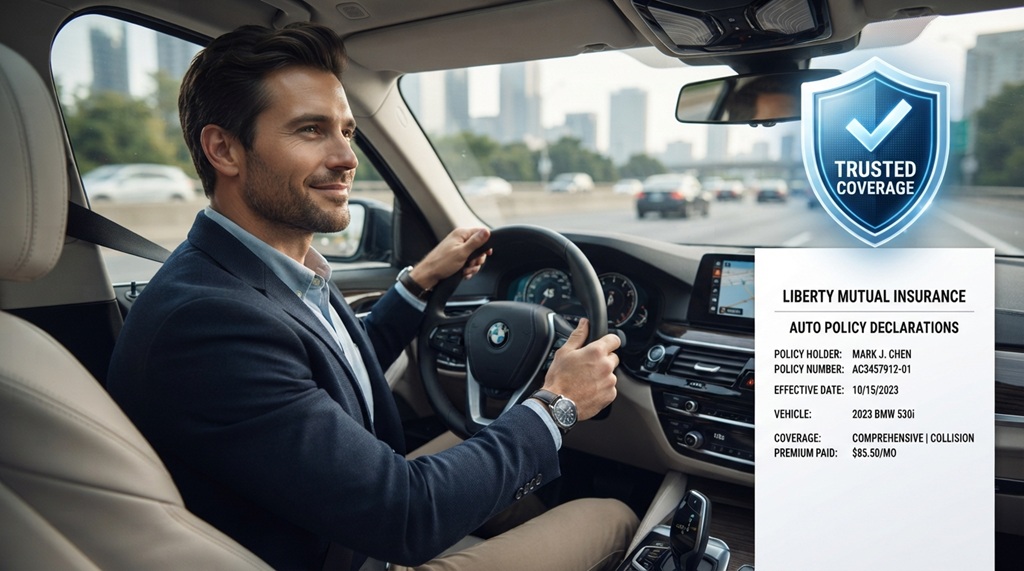
Full coverage is different. It usually includes:
- Collision coverage (pays for damage to your own car after a crash)
- Comprehensive coverage (pays for non-collision damage, like theft or weather)
- Liability coverage (the legally required portion)
The law doesn’t force you to buy collision or comprehensive coverage. But your lender might. If you’re financing or leasing a vehicle, the lender will almost certainly require full coverage until the loan is paid off.
Uninsured and Underinsured Motorist Coverage
Some states also require uninsured motorist (UM) or underinsured motorist (UIM) coverage. This protects you if another driver hits you and either has no insurance or doesn’t have enough.
According to industry experts, a meaningful share of drivers on the road carry no insurance at all. UM/UIM coverage exists specifically to close that gap. It’s one of the smartest add-ons a driver can carry, even in states where it isn’t mandatory.
What Happens If You Drive Without Insurance
Driving without required insurance carries real legal and financial risk. Penalties vary by state, but they generally escalate with each offense.
Common consequences include:
- Fines, often ranging from a few hundred to over a thousand dollars
- License suspension until you provide proof of coverage
- Vehicle registration suspension
- SR-22 filing requirements after your license is reinstated
- Possible vehicle impoundment in some states
An SR-22 is not an insurance policy. It’s a form your insurer files with the state to prove you carry the minimum required coverage. States often require it after a serious violation, like driving uninsured or getting a DUI. Drivers usually must maintain an SR-22 for three years, though this timeframe varies.
Beyond legal penalties, the financial risk is often worse. If you cause an accident while uninsured, you’re personally responsible for the other driver’s medical bills and repair costs. These costs can reach tens of thousands of dollars, and the other party can sue you directly to recover them.
How Law Enforcement and Courts Verify Your Insurance Status
Law enforcement officers and court systems rely on real-time electronic verification databases connected directly to insurer networks, allowing police to instantly confirm your coverage during standard traffic stops meaning digital proof on your smartphone is increasingly accepted alongside traditional paper cards in your glove box. Following an accident, official police report documentation immediately flags uninsured drivers to enforce statutory compliance, while state departments regularly execute automated database audits that trigger warning notices or registration suspensions whenever policy lapses are detected. While maintaining active, continuous coverage shields you from these severe legal penalties, filing a report after an incident can still impact your wallet; if you already carry coverage and recently filed a claim, discover why your auto insurance rate spiked after a claim to learn how post-accident risk evaluations affect your monthly premium.
Do You Need Insurance If You Don’t Own a Car
You can still need insurance even without owning a vehicle. This surprises a lot of people, but it makes sense once you understand how liability works.
If you regularly borrow or rent cars, you’re still legally responsible for any accident you cause. A non-owner car insurance policy covers this gap. It provides liability coverage when you drive a vehicle you don’t own, such as a friend’s car or a rental.
Non-owner policies are also useful for reinstating a suspended license after an uninsured driving violation. Many states require proof of ongoing coverage, even if you don’t currently own a car, before they’ll lift the suspension.
If you rarely drive, this might feel unnecessary. But if a lapse in coverage could get you into legal trouble later, a non-owner policy is worth the relatively low cost.
A Practical Angle Most Articles Skip: How Coverage Gaps Actually Hurt You Later
Most articles stop at “you’ll get fined.” But the bigger long-term cost is often invisible until you go shopping for a new policy. Insurers track coverage lapses, and a gap on your record can follow you for years.
When your policy lapses, even briefly, insurers view you as a higher risk. This isn’t just a moral judgment. It’s a statistical one. Data consistently shows that drivers with coverage gaps file claims at higher rates than drivers with continuous coverage.
As a result, your next policy often costs more, sometimes significantly more, even if you never got into an accident during the gap. Some insurers ask directly on applications whether you’ve had a lapse in the past six to twelve months. Answering yes can bump your quoted rate by a noticeable margin.
The fix is simple: never let a policy lapse, even for a few days, while you shop for a better rate. Line up your new policy’s start date before you cancel the old one. This one habit protects both your legal standing and your long-term insurance costs.
Frequently Asked Questions
Is it illegal to drive without insurance?
Yes, in nearly every state, driving without the minimum required insurance is illegal. Exceptions exist only in states like New Hampshire, which allow proof of financial responsibility instead of a traditional policy.
What is the minimum insurance required by law?
Minimum requirements vary by state but generally include bodily injury liability and property damage liability. Some states also require personal injury protection or uninsured motorist coverage.
Can I get car insurance after a violation for driving uninsured?
Yes, but you’ll likely need to file an SR-22 form through your insurer to reinstate your license. Expect higher premiums for a period of time, since insurers treat this violation as a significant risk factor.
Does insurance follow the car or the driver?
In most states, liability insurance follows the car, not the driver. This means if you lend your car to someone and they cause an accident, your policy typically pays first, though the details can vary by insurer and state.
Do I need insurance if my car is not being driven?
If your vehicle is registered, most states still require continuous insurance, even if it’s parked. To avoid this requirement, you generally need to formally suspend the registration with your state’s DMV.
Conclusion
Auto insurance is mandatory for almost every driver in the United States, with only a few narrow exceptions like New Hampshire’s alternative financial responsibility rule. States set their own minimum coverage requirements, and skipping insurance can lead to fines, license suspension, and serious out-of-pocket costs after an accident. Beyond the legal risk, coverage lapses can quietly raise your future premiums for years to come. The safest approach is simple: know your state’s requirements, keep your policy active without gaps, and review your coverage regularly to make sure it still fits your needs.