

Auto insurance handles a total loss payout by declaring your car a total loss, calculating its actual cash value, and paying you that amount minus your deductible and any liens. The insurer does not pay to repair the car. Instead, it pays you (or your lienholder) a lump sum based on what the vehicle was worth right before the accident.
This process can feel confusing, especially if you disagree with the insurer’s number. Most drivers only go through a total loss claim once or twice in their lives, so the rules and terminology catch them off guard.
Below, we break down exactly how insurers decide a car is a total loss, how they calculate the payout, and what you can do if the offer feels too low.
What Makes a Car a “Total Loss”?
A car becomes a total loss when the cost to repair it equals or exceeds a set percentage of its pre-accident value. This is called the total loss threshold, and it varies by state.
Most states use one of two formulas:
The Total Loss Formula (TLF)
Under this formula, insurers add the repair cost to the salvage value of the vehicle. If that combined number exceeds the car’s actual cash value, the insurer declares a total loss.
The Total Loss Threshold (TLT)
This method is simpler. States set a fixed percentage, often between 60% and 100% of the car’s value. If repair costs cross that percentage, the insurer must total the car, regardless of the salvage value.
Because these thresholds differ from state to state, the same accident can result in a repair in one state and a total loss in another. Always check your state’s specific threshold, since it directly affects whether you get a repair estimate or a payout offer.
How Insurers Calculate Your Payout
Insurers calculate a total loss payout using the vehicle’s actual cash value (ACV), not the amount you originally paid or the amount left on your loan. ACV reflects what your car was worth immediately before the crash, factoring in age, mileage, condition, and local market prices.
Actual Cash Value (ACV) Explained
To determine ACV, most insurers pull data from comparable vehicle sales in your area. They look at similar make, model, year, trim, mileage, and condition. Some companies use third-party valuation tools, while others rely on in-house databases.
Deductions From Your Payout
Your final check is rarely the full ACV. Insurers typically subtract:
- Your policy deductible
- Any outstanding loan or lease balance (paid directly to the lienholder)
- Prior unrepaired damage, if documented
- Salvage value, if you choose to keep the vehicle
Additions to Your Payout
Depending on your policy and state, you may also receive:
- Sales tax on the replacement vehicle, in states that require it
- Title and registration fees
- Gap insurance payouts, if you carry that coverage and still owe more than the ACV
Gap Insurance and Its Role in Total Loss Claims
Gap insurance covers the difference between what you owe on your car loan and the ACV payout, if the loan balance is higher. Without gap coverage, you are personally responsible for paying that difference out of pocket.
This situation is common with new cars, since vehicles lose value quickly in the first few years while the loan balance decreases more slowly. If you financed a newer vehicle with a small down payment, ask your insurer whether gap coverage applies to your policy before you finalize the claim.
How Long the Total Loss Process Typically Takes
Most total loss claims take two to four weeks from the accident to the final payout, though the timeline depends on how quickly the insurer inspects the vehicle and confirms the valuation. Complex cases, such as disputes over value or missing paperwork, can stretch this timeline further.
The general process follows these steps:
- You report the accident and file a claim.
- An adjuster inspects the vehicle or reviews photos and repair estimates.
- The insurer determines whether the car meets the total loss threshold.
- If it does, the insurer sends a valuation report with the proposed ACV.
- You review, negotiate if needed, and accept the settlement.
- The insurer issues payment, often within 7 to 10 business days after you accept.
What Happens to Your Vehicle After a Total Loss?
Once you accept the settlement, your insurance company assumes ownership of the vehicle and typically sells it at a salvage auction to recover a portion of the payout through its remaining value. If you are currently navigating vehicle damage, understanding what auto insurance covers after a crash can help you manage the initial claims process effectively before an insurer officially declares the vehicle a total loss.
Keeping Your Totaled Car
In many states, you can choose to keep the vehicle instead of surrendering it. If you do, the insurer subtracts the salvage value from your payout, and you receive a salvage title instead of a clean title. This title status affects future resale value and may limit your ability to insure the car normally going forward.
Salvage Titles and Rebuilding
Some owners repair and rebuild a totaled vehicle, then apply for a rebuilt title through their state’s DMV. This process usually requires a safety inspection before the car can be legally driven again. Rules vary significantly by state, so check local DMV requirements before attempting a rebuild.
What to Do If You Disagree With the Insurer’s Offer
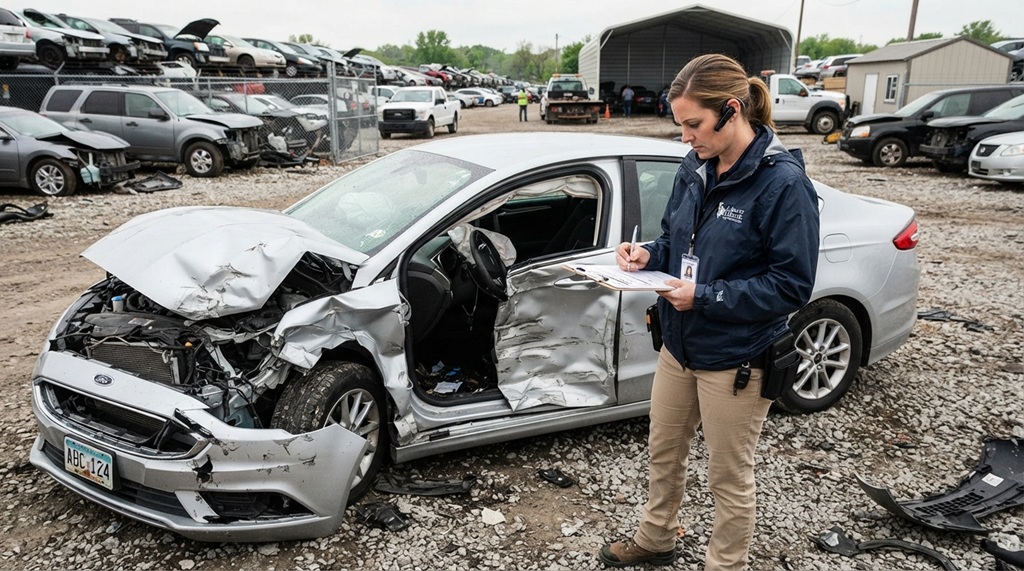
You have the right to dispute a total loss valuation if you believe it undervalues your vehicle. Start by requesting the full valuation report from your insurer, which should list the comparable vehicles used to calculate your ACV.
Here is a practical, often-overlooked step: pull your own comparable listings from local dealerships and private sale sites on the same day you receive the offer, not weeks later. Insurers weigh recent, local, and genuinely comparable listings most heavily, and a stale search from a different region rarely moves the number. Save screenshots with dates, mileage, and asking prices, since listings get taken down quickly.
Steps to Dispute a Low Offer
- Request the itemized valuation report in writing.
- Compare it against your own research of similar local listings.
- Point out any factual errors, such as incorrect mileage, missing features, or wrong trim level.
- Submit your evidence in writing and ask for a written response.
- If the insurer will not budge, request appraisal through your policy’s appraisal clause, if one exists.
- As a last resort, contact your state’s department of insurance or consult an attorney.
When to Involve an Attorney
Consider legal help if the insurer refuses to explain its valuation, if the gap between offers is large, or if you suspect bad faith practices, such as unreasonable delays or lowball offers without justification. An attorney experienced in insurance disputes can review your policy language and push back on behalf of your interests.
Frequently Asked Questions
How is the payout amount determined for a totaled car?
Insurers calculate the payout using the vehicle’s actual cash value right before the accident, based on comparable local sales. They then subtract your deductible, any loan balance owed to a lienholder, and salvage value if you keep the car.
Can I negotiate a total loss settlement?
Yes, you can negotiate by presenting your own comparable vehicle listings and pointing out valuation errors. Insurers often adjust offers when presented with solid, documented evidence of higher local market value.
Do I still have to make car payments after a total loss?
You must continue payments until the insurer pays your lienholder directly, which usually happens within a few weeks of accepting the settlement. If a gap remains after that payout, you’re responsible for it unless you have gap insurance.
What happens if my car is worth less than what I owe?
If the ACV payout is less than your loan balance, you owe the difference unless you carry gap insurance. This gap coverage pays the shortfall directly, so it’s worth checking your policy or loan agreement for this protection.
Is a total loss the same as the car being unrepairable?
No, a total loss is a financial decision, not always a mechanical one. Many totaled cars are technically repairable, but the insurer declares them a total loss because repair costs exceed the state’s threshold percentage of the car’s value.
Conclusion
Auto insurance handles total loss payouts by comparing repair costs to your state’s total loss threshold, then calculating a payout based on actual cash value, minus your deductible and any loan balance. Understanding this process, and knowing you can dispute a low offer, puts you in a stronger position to receive a fair settlement. If your insurer’s number seems off, gather your own comparable listings quickly and don’t hesitate to push back in writing.