

Car accidents happen in an instant, but their consequences can ripple through a victim’s life for years. Physical injuries, emotional trauma, and mounting medical bills create immense stress. Seeking compensation from the at-fault party seems like a straightforward path to recovery.
However, a complex legal doctrine known as the “seatbelt defense” can sometimes complicate matters, potentially reducing the amount an injured person can recover, even if they weren’t responsible for the crash itself. This defense hinges on a simple, yet controversial question: should your failure to wear a seatbelt affect your ability to receive full compensation for injuries caused by someone else’s negligence? The answer, frustratingly, isn’t uniform and has been shaped by evolving laws and landmark court decisions across the country.
Demystifying the Seatbelt Defense
At its core, the seatbelt defense is a legal argument raised by defendants (or their insurance companies) in car accident lawsuits. The goal is to reduce the amount of damages they have to pay by arguing that the plaintiff’s injuries were caused, or made worse, by their failure to wear an available seatbelt. This defense typically operates under one of two related legal principles:
-
Comparative Negligence (or Comparative Fault):
This principle compares the negligence of all parties involved in an accident. In states that allow the seatbelt defense under this theory, the jury might be asked to assign a percentage of fault to the plaintiff for their injuries specifically because they weren’t buckled up. The reasoning is that while the plaintiff didn’t cause the accident, their choice not to wear a seatbelt contributed to the severity of their harm. The plaintiff’s total damage award is then reduced by their percentage of fault.
-
Mitigation of Damages (or Avoidable Consequences):
This legal doctrine states that an injured person has a duty to take reasonable steps to minimize their losses or injuries after an incident occurs (e.g., seeking appropriate medical treatment). Some jurisdictions have controversially applied this concept before the injury occurs, arguing that failing to wear a seatbelt is a failure to take reasonable steps to minimize potential harm before the accident even happened. Like comparative negligence, if successful, this argument results in a reduction of the plaintiff’s compensation.
The application and even the name of the underlying principle can vary, but the outcome is similar: the defendant seeks to pay less by focusing on the plaintiff’s actions regarding seatbelt use.
A Patchwork of Laws: How Different States Handle Seatbelt Evidence
Perhaps the most crucial aspect of the seatbelt defense is that there is no single, nationwide rule. Its admissibility and impact vary dramatically from state to state, creating a complex legal landscape. Generally, states fall into one of three categories:
-
Prohibition:
A significant number of states have statutes or established case law explicitly prohibiting the introduction of evidence that an accident victim wasn’t wearing a seatbelt to prove negligence or reduce damages. Lawmakers in these states often reasoned that the defendant’s negligence caused the accident itself, and the victim shouldn’t be penalized for failing to anticipate that negligence. Mandatory seatbelt laws already carry their own penalties (like fines), and allowing the defense could unfairly punish the injured party. New Mexico, for example, has a law prohibiting the seatbelt defense. Pennsylvania is another state where it’s generally not allowed.
-
Limited Admissibility:
Some states permit the seatbelt defense but place statutory limits on how much it can affect the plaintiff’s recovery. For instance, Wisconsin allows the defense but caps the potential reduction in damages at 15%. Missouri limits the reduction to a mere 1%. Iowa, Michigan, and Oregon have set a 5% cap. These limits represent a compromise, acknowledging a potential duty to buckle up while preventing a minor oversight from drastically impacting compensation for serious injuries.
-
Admissibility (with Variations):
Other states allow evidence of seatbelt non-use to be considered by the jury, often under comparative fault principles, without specific statutory caps on the reduction. However, even within this group, nuances exist.
- Texas: A landmark decision by the Texas Supreme Court (Nabors Well Servs. v. Romero, 2015) shifted the perspective. Previously viewed through the lens of post-occurrence mitigation, the court ruled that non-use could be considered pre-occurrence negligence contributing to the plaintiff’s injuries. Admitting this evidence requires the defendant to show it’s relevant – specifically, that non-use caused or contributed to the injuries, often necessitating expert testimony.
- Florida: Florida allows the seatbelt defense under comparative negligence. A recent significant change (2023) moved Florida to a “modified comparative negligence” system. Now, if a plaintiff is found more than 50% responsible for their own injuries (which could potentially include a large percentage attributed to seatbelt non-use), they are barred from recovering any damages.
- Georgia: Georgia’s statute (O.C.G.A. § 40-8-76.1(d)) generally prohibits using the failure to wear a seatbelt as evidence of negligence or causation. However, a recent appellate court interpretation distinguished between complete non-use and improper use. In a case involving Ford, the court suggested evidence that occupants wore their seatbelts improperly (e.g., shoulder strap under the arm) might be admissible, as the statute specifically addresses the “failure… to wear” the belt, not necessarily how it was worn. This highlights the intricate interpretations shaping the defense.
- Other Allowing States: Jurisdictions like Alaska, Arizona, California, Colorado, New Jersey, New York (often framed as mitigation), Ohio, and West Virginia generally permit the defense to be raised.
It’s also worth noting New Hampshire stands alone as the only state without a law requiring adults to wear seatbelts.
The Rationale Behind the Rules: Arguments Shaping the Debate
The stark differences in state laws reflect deeply held, competing arguments about fairness, responsibility, and the purpose of tort law:
Arguments For the Seatbelt Defense:
- Personal Responsibility: Proponents argue individuals have a responsibility to protect themselves, and seatbelts are a known, effective safety device. Failing to use one is a failure of personal responsibility.
- Mitigation Principle: Wearing a seatbelt is a simple, reasonable step that can significantly lessen injuries. Failing to do so can be seen as failing to mitigate potential damages.
- Causation: If injuries would have been less severe or avoided entirely had a seatbelt been worn, the defendant shouldn’t be liable for the additional harm caused by the plaintiff’s choice.
- Fairness to Defendants: It seems unfair to make a defendant pay for injuries the plaintiff could have easily prevented by buckling up.
Arguments Against the Seatbelt Defense:
- Punishing the Victim: Opponents argue the defense unfairly punishes the accident victim, shifting focus away from the defendant’s primary negligence that caused the collision.
- Causation Complexity: Proving precisely which injuries were caused or worsened by non-use, versus the crash impact itself, can be highly complex, speculative, and require expensive expert testimony, disadvantaging plaintiffs.
- No Duty (Historically/Common Law): Historically, many courts rejected the defense arguing there was no common law duty to wear a seatbelt. While most states now have mandatory use laws, opponents argue these statutes carry their own penalties (fines) and weren’t intended to affect civil liability.
- Defendant’s Negligence is Primary: The core argument remains that the accident wouldn’t have happened but for the defendant’s negligence. The seatbelt issue only arises because of that initial wrongdoing.
Related: Best Practices for Preventing Car Accidents and Minimizing Injury Claims
Proving the Defense: What Defendants Must Show
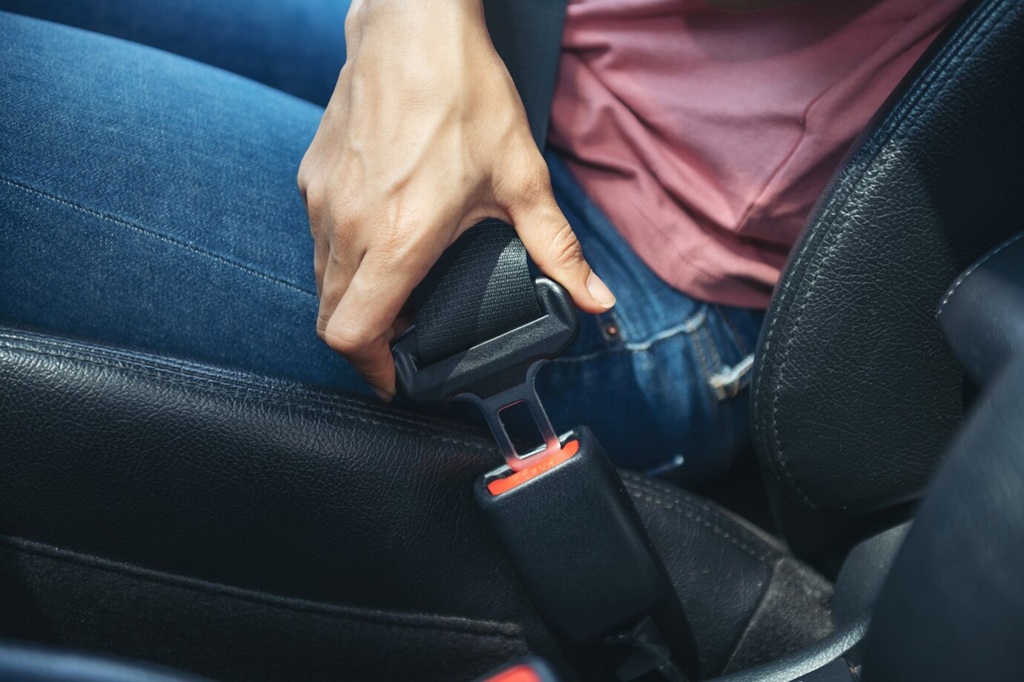
Where the seatbelt defense is allowed, the burden of proof rests squarely on the defendant. They typically must establish several key elements:
- Availability and Functionality: Prove that there was a working seatbelt available to the plaintiff in the vehicle.
- Unreasonable Non-Use: Show that the plaintiff’s failure to wear the seatbelt was unreasonable under the circumstances (often presumed if state law mandates use, unless there’s a valid reason like a medical condition).
- Causal Link: This is often the most challenging element. The defendant must demonstrate, usually through expert testimony (like biomechanical engineers or accident reconstructionists), that the plaintiff’s failure to use the seatbelt was a substantial factor in causing specific injuries or increasing their severity. They must connect the lack of restraint to the actual harm suffered, distinguishing it from injuries that would have occurred regardless.
Real-World Impact: What This Means for Accident Victims
The applicability of the seatbelt defense can have a profound financial impact on an accident victim’s recovery. If the defense is successful:
- Under comparative fault, the victim’s damage award will be reduced proportionally to their assigned fault for non-use.
- Under mitigation theories, damages related to injuries deemed “avoidable” by seatbelt use may be subtracted.
- In modified comparative fault states like Florida, being found more than 50% responsible for one’s injuries (potentially due to non-use) could mean recovering nothing at all.
Beyond the financial implications, the defense adds complexity to litigation. It necessitates gathering more evidence, potentially hiring opposing experts, and engaging in intricate arguments about injury causation, increasing the time and expense involved in resolving a claim.
Related: Navigating Car Injury Claims Court Proceedings Without a Lawyer
People Also Ask (FAQs)
-
If I wasn’t wearing a seatbelt, can I still sue after a car accident?
Yes, absolutely. Not wearing a seatbelt does not automatically prevent you from filing a lawsuit or making an insurance claim if someone else caused the accident. However, depending on your state’s laws, your recoverable damages (the amount of money you receive) might be reduced if the seatbelt defense is successfully argued.
-
Is the “seatbelt defense” allowed everywhere in the U.S.?
No. There is significant variation. Many states prohibit it by law, some allow it but limit the percentage reduction in damages, and others allow it more broadly, often under comparative fault rules. It’s crucial to know the specific law in the state where the accident occurred.
-
What’s the difference between comparative negligence and mitigation of damages in seatbelt cases?
- Comparative Negligence focuses on assigning a percentage of fault to the plaintiff for contributing to the severity of their injuries through non-use, reducing their overall award by that percentage.
- Mitigation of Damages traditionally applies after an injury occurs (failing to follow doctor’s orders), but in the seatbelt context, it’s sometimes argued (controversially) as a failure to take reasonable pre-accident steps to minimize potential harm, leading to a reduction for avoidable injuries. The end result (reduced compensation) is often similar.
-
Do I need an expert witness if the seatbelt defense is raised?
Often, yes. The defendant typically needs expert testimony (e.g., biomechanical engineer, medical expert) to prove that the failure to wear a seatbelt actually caused or worsened specific injuries. The plaintiff may then need their own expert to rebut the defendant’s evidence or show that the injuries would have occurred even with seatbelt use.
-
Does improperly wearing a seatbelt count the same as not wearing one at all?
This can depend on the specific wording of state law and court interpretations. As seen in a Georgia case, some courts might distinguish between complete non-use (which might be barred as evidence by statute) and improper use (which might be admissible). Always consult local legal counsel.
Conclusion
The seatbelt defense remains a contentious and complex area of personal injury law. While the life-saving benefits of seatbelts are undeniable, the legal consequences of failing to buckle up in the context of a civil lawsuit vary significantly depending on jurisdiction. Landmark decisions and evolving statutes continue to shape how courts handle evidence of seatbelt non-use, impacting the compensation available to accident victims.
If you’ve been injured in a car accident, regardless of whether you were wearing a seatbelt, understanding your rights is paramount. The applicability and potential impact of the seatbelt defense underscore the importance of seeking advice from an experienced personal injury attorney who is knowledgeable about the specific laws and precedents in your state. They can help navigate this intricate legal issue and advocate for the fairest possible outcome in your case.


